from youarewithinthenorms.com
NORMAN J CLEMENT RPH., DDS, NORMAN L. CLEMENT PHARM-TECH, MALACHI F. MACKANDAL PHARMD, BELINDA BROWN-PARKER, IN THE SPIRIT OF JOSEPH SOLVO ESQ., INC., SPIRIT OF REV. IN THE SPIRIT OF WALTER R. CLEMENT BS., MS, MBA. HARVEY JENKINS, MD, PH.D., IN THE SPIRIT OF C.T. VIVIAN, JELANI ZIMBABWE CLEMENT, BS., M.B.A., IN THE SPIRIT OF THE HON. PATRICE LUMUMBA, IN THE SPIRIT OF ERLIN CLEMENT SR., EVELYN J. CLEMENT, WALTER F. WRENN III., MD., JULIE KILLINGSWORTH, RENEE BLARE, RPH, DR. TERENCE SASAKI, MD LESLY POMPY MD., CHRISTOPHER RUSSO, MD., NANCY SEEFELDT, WILLIE GUINYARD BS., JOSEPH WEBSTER MD., MBA, BEVERLY C. PRINCE MD., FACS., NEIL ARNAND, MD., RICHARD KAUL, MD., IN THE SPIRIT OF LEROY BAYLOR, JAY K. JOSHI MD., MBA, AISHA GARDNER, ADRIENNE EDMUNDSON, ESTER HYATT PH.D., WALTER L. SMITH BS., IN THE SPIRIT OF BRAHM FISHER ESQ., MICHELE ALEXANDER MD., CUDJOE WILDING BS, MARTIN NJOKU, BS., RPH., IN THE SPIRIT OF DEBRA LYNN SHEPHERD, BERES E. MUSCHETT, STRATEGIC ADVISORS
A Survival Guide for Physicians Facing Federal Persecution
“This book is not just a memoir of survival—it is a blueprint for those standing on the precipice of ruin. I had seen the legal system from the outside, working as an expert witness in psychiatric cases. But when I became the accused, I realized just how ruthless, relentless, and unforgiving the system truly is…

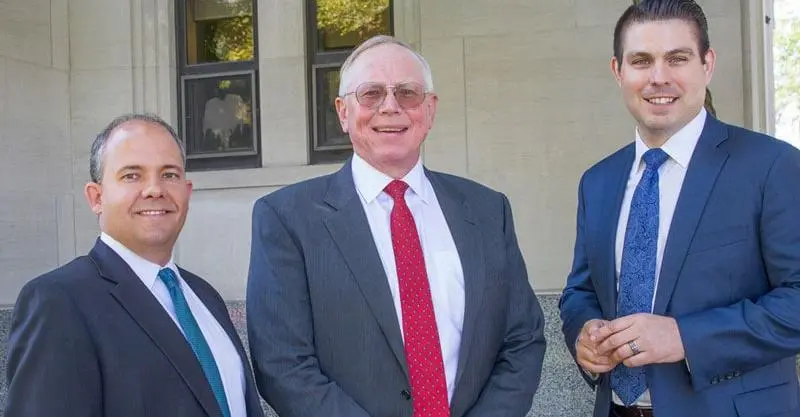
..With the help of renowned legal warrior Paul Hetznecker and defense attorney Ronald Chapman II, I fought my way back from the brink. This book details that grueling war, providing tactical insights for physicians facing the unthinkable.

Expose the deceptive tactics employed by prosecutors
I expose the deceptive tactics employed by prosecutors, the concealed weaknesses in federal cases, and the crucial moves that can determine whether someone walks free or spends their life behind bars.

I draw on their courtroom triumphs, scholarly foundation, and Chapman’s military experience with the United States Marine Corps, as well as their passion for effective communication as they navigate the complexities of modern persuasion with authenticity and skill.”


The federal justice system, particularly over the last 30 years, has undergone a dramatic shift in its approach to healthcare, moving from a reverence for doctors to actively prosecuting them.
Laws like the Controlled Substances Act and HIPAA (specifically 18 U.S.C. §1347 and §1349) have been weaponized, allowing federal prosecutors to pursue healthcare fraud claims without always requiring evidence of specific intent.

“…LAW DESIGNED IN VAGUENESS CAN BE DESIGNED TO BE INTERPRETED EITHER WAYS…”
from docnorm’s rule number #5., norman j clement,rph., dds

Algorithmic Legal Plunder: The New Tyranny
Dr. Neil Anand warns us in his August 7th article, “90 Seconds to Midnight: Humanity Approaches the Omega Point with the Birth of General Artificial Intelligence (ChatGPT-5.0)” published in the Blog Doctors of Courage;

” In this strange hour of American human history, when social media algorithms recommend our thoughts, wars are waged with drones, and artificial intelligence neural networks whisper into the architecture of our laws, America finds itself on a spiritual ledge.

..In The Law (1850), Frédéric Bastiat warned of legal plunder, the use of law to take from some and give to others under a veneer of legitimacy…
…Today, artificial intelligence algorithms have become its most sophisticated instrument…This legalized plunder pattern extends beyond healthcare. Credit scoring models that disadvantage specific zip codes. School funding formulas that reward districts with political connections. “Objective” algorithms whose statistical fingerprints reveal systematic bias. Each appears neutral, each enacts legal plunder on a massive scale...”
And the United States, for all its chaos, is barreling toward it, dragging humanity along with it. But here’s the existential question: Who gets to design the final interface between freedom and superintelligence?
Will it be corporate technocrats with godlike tools and no philosophy?
Or will we arm artificial intelligence with the only doctrine that guards against spiritual totalitarianism, which is Bastiat’s law of liberty?

Beneath us, a complex, turbulent past of ideological war, economic volatility, and spiritual exhaustion.
Ahead of us, according to U.S. artificial intelligence government experts, lies the convergence of human and machine intelligence, which futurists call the Technological Singularity.”
This means physicians can be charged for treatment decisions that deviate from bureaucratic standards or for billing errors, even if those deviations are medically sound or unintentional. This shift has profound implications:
- Criminalization of Medical Judgment: What was once considered a sound clinical decision can be reinterpreted as a criminal act if it doesn’t align with administrative checklists or billing codes.
- Erosion of Trust: The relationship between doctor and patient, once sacred and based on trust, is now often replaced with suspicion and surveillance.
- Increased Prosecutions: There has been a marked rise in criminal investigations against medical professionals, with many facing allegations that challenge their professional integrity, often without direct evidence of harm to patients.
- Focus on Metrics over Nuance: Government agencies often use data analytics and AI to identify “outliers” or “emerging fraud schemes,” treating statistical deviations as probable cause for criminal investigation, without considering the complex clinical context or patient needs.
- Stigma and Ruin: Even if charges are never filed or are later overturned, the mere presence of agents, seizure of records, and public exposure can ruin a physician’s career and reputation, as seen in cases like Dr. Pramela Ganji and Dr. Forrest Tennant. This environment contributes to medical burnout and discourages independent practices.


CLEMENT RULE OF ARTIFICIAL STUPIDITY (THE AC RULE) [ AI (alg*)= AS ] AND INTIMATE KNOWLEDGE OF DESIGN AND ABUSE IN LAW ENFORCEMENT

TO CASH APP:$docnorm
ZELLE 3135103378

ALL WATCHED OVER BY MACHINES OF LOVING GRACE
BE SURE TO DONATE TO THE MARK IBSEN GOFUNDME DEFENSE FUND, WHERE THE SON ALWAYS RISES!!!

FOR NOW, YOU ARE WITHIN
THE NORMS
REFERENCES:
Briefing Document: Review of “Exposing the DEA’s Junk Science and AI Injustice”
This briefing document summarizes the main themes, key arguments, and most important facts presented in the provided source, “Exposing the DEA’s Junk Science and AI Injustice.” The document highlights criticisms of the DEA’s enforcement practices, the role of expert witnesses, the impact of AI algorithms in healthcare, and the American Medical Association’s (AMA) evolving stance on pain management and the opioid crisis.
I. Core Arguments & Main Themes
The central thesis of the provided excerpts is a scathing critique of the DEA’s approach to the opioid crisis, particularly its reliance on “junk science” and problematic AI algorithms, which are argued to lead to injustice, stigmatization of patients, and the criminalization of legitimate pain management.
Key Themes:
- Critique of DEA Practices and “Junk Science”: The document heavily criticizes the DEA’s investigative methods, particularly its use of “expert witnesses” like Donald Sullivan and Timothy Munzing, whose testimonies are labeled as “junk science” due to their alleged lack of direct patient examination or physician interviews.
- Harmful Impact of AI Algorithms: A significant theme is the danger of AI-driven surveillance systems used by federal agencies and private insurers to flag “outliers” in healthcare data. These systems are accused of violating constitutional and human rights by omitting context and leading to wrongful accusations.
- AMA’s Evolving Stance on Pain Management: The American Medical Association (AMA) is presented as advocating for a more compassionate, patient-centric approach to pain management, moving away from a sole focus on prescription opioids and challenging the DEA’s “opioid war.”
- Stigmatization and Barriers to Care: A recurring concern is the stigmatization of pain patients and the obstacles they face in accessing appropriate care due to restrictive policies, insurer practices, and pharmacist interrogations.
- Racial Bias and Injustice: The source implicitly and explicitly raises concerns about racial bias within the justice system, particularly in the singling out of “black practitioners” and the role of “white privilege” in legal outcomes.

II. Most Important Ideas and Facts
A. Criticisms of DEA’s “Expert Witnesses” and “Junk Science”:
- Dr. Donald Sullivan, PhD (Ohio State University College of Pharmacy):Accused of providing “junk science” and relying on “tacit stupidity” in courtroom testimonies.
- His opinion that patients traveling “significant distances” to fill prescriptions are a “red flag of abuse and diversion” is heavily challenged.
- Quote: “DEA’s expert Donald Sullivan opined that both patients traveling long distances from their residences and patients traveling long distances from the medical practices of the prescribers to have their prescriptions filled are significant red flags…”
- Fact: Judge Mark D. Dowd, in a recommended order, partially rejected Sullivan’s testimony regarding distance, stating, “The 38 miles from M.M.’s home to the Respondent is not overly suspicious on its face.”
- Fact: Sullivan “never appears to have examined or interviewed the patients or prescribing physicians” and admitted under sworn testimony to not having done so.
- Fact: Despite the questionable foundation, Judge Dowd’s opinion states, “…does not affect the probity of Dr. Sullivan’s opinions…” which is criticized as an example of “white privilege supersedes it all.”
- Accusations of “Professional and Academic Fraud charges” against Sullivan are being renewed, with calls for his termination from Ohio State University.
- Dr. Timothy Munzing, MD:Labeled as part of “The DEA’s Cadre of Junk Science-tiers and Super Defrauders of the American Taxpayer’s Money.”
- Fact: GovTribe records show Munzing is paid $300 an hour by the DEA and received over $250,000 in recent months to review patient records and testify.
- Similar to Sullivan, Munzing is accused of relying on “tacit bias without examining radiographs (X-rays) of the patients or interviewing prescribing practitioners.”
- Quote: “Their testimony, which often relies on tacit bias without examining radiographs (X-rays) of the patients or interviewing prescribing practitioners in many cases, is equivalent to the discredited bite mark evidence once used in courtrooms.”
B. The Perils of AI in Justice and Healthcare Fraud Surveillance:
- AI Systems and “Red Flags”: Federal agencies and private insurers use AI systems that “ingest a deluge of data—insurance claims, pharmacy logs, and public records—and ‘red flags’ to misidentify individuals whose behaviors deviate from established statistical norms.”
- Lack of Context: These systems “do not ask why these outliers occur” and “omit context in violation of constitutional and human rights.”
- Palantir’s AI: Specifically critiqued for not considering “whether a patient needed that care or whether a physician was serving a high-risk population.”
- “Hyperreality”: Dr. Neil Anand, MD, draws parallels between Palantir’s predictive AI and Jean Baudrillard’s concept of “hyperreality,” where “simulations and symbols no longer represent reality; they replace it.”
- Quote: “When we entrust our systems of justice to AI algorithms that treat correlation as conviction, we are not fighting fraud; we are dismantling the very scaffolding that makes justice and reality possible.”
- Principle of Alternate Possibilities (PAP): The document argues that AI undermines this core legal and ethical principle, which states “a person is morally responsible for an action only if they could have chosen differently.”
- Impact on Justice: AI-driven systems are blamed for contributing to situations like the “Detroit-Five” case, where a doctor was “NOT GUILTY” by a jury despite being targeted by these systems.
C. AMA’s Recommendations and Shifting Perspective:
- Revised CDC Guidelines: The AMA urges the CDC to substantially improve its guidelines by:
- Acknowledging that many patients experience poorly controlled, stigmatizing pain that requires “more compassionate patient care.”
- Using the guidelines as part of a “coordinated federal strategy to help ensure patients with pain receive comprehensive care delivered in a patient-centric approach.”
- Urging stakeholders to “immediately suspend the use of the CDC Guideline as an arbitrary policy to limit, discontinue or taper a patient’s opioid therapy.”
- Preferred Therapies: Nonpharmacologic and non-opioid pharmacologic therapies are preferred, but opioid therapy should be considered if “expected benefits for both pain and function are anticipated to outweigh risks to the patient.”
- Individualized Treatment: The AMA’s rationale is based on the “fundamental principle that treatment decisions for patients with pain must be made on an individualized basis.”
- Addressing Misuse of Guidelines: The AMA “urges the CDC to specifically address” how its guideline has been “used to deny access to legitimate pain care and to non-consensually taper patients.”
- Beyond Prescription Opioids: The AMA states, “The nation no longer has a prescription opioid-driven epidemic. However, we are now facing an unprecedented, multi-factorial, and much more dangerous overdose, and the drug epidemic is driven by heroin and illicitly manufactured fentanyl, fentanyl analogs, and stimulants.”
- Barriers to Care: The AMA highlights that “access to non-pharmacologic and non-opioid pharmacological treatments and reimbursement for them are often inadequate,” creating a “Catch-22” for physicians.
- Pharmacist Conduct: The AMA “strongly supports pharmacists carrying out their corresponding responsibilities,” but expresses concern over “interrogations at the pharmacy counter, as well as denials of legitimate medication.”
- Quote: “The AMA urges the CDC to provide strong guidance and support for physicians and pharmacists to work together rather than jumping to conclusions about a patient’s PDMP report.”

Dr. William Byrd is a development economist with an academic background that includes a doctorate in economics from Harvard University and a master’s degree in East Asian Regional Studies from the same institution. He joined USIP in April 2012 as a senior expert, working on Afghanistan.
D. Impact on Patients and Providers:
- Stigmatization: Patients like “MR. DECROYO GREEN, RECOVERING FROM GUNSHOT INJURY, IS FORCED TO TRAVEL AROUND BECAUSE OF A PHARMACIST WHO STIGMATIZED HIM.”
- Criminalization of Pain Management: Jack Folson RPh. states, “Presently, because of the criminalization of pain management, suffering has increased and has led to an increase in Heroin use. Due to the dangers associated with heroin use, this, more than anything else, in this case, is an immediate threat to public safety. To put it plainly, the actions by the DEA are causing the thing that they are trying to avoid.”
- Physician Harassment: The DOJ/DEA strategy is described as “to starve us out of business through harassment, intimidation, and fraudulent misrepresentations by their network of so-called DEA experts.”
- Racial Disparity: “This unlawful practice of singling out black practitioners must stop.”
III. Call to Action / Concluding Sentiments
The source concludes with a powerful, emotionally charged call for radical change, suggesting that the current “system” is “so eroded that a total defunding would aid rebuilding the brick and mortar basics.” It critiques the “moral fabric” and “soul of civilization,” implying that the pursuit of money and neglect of duty have led to societal decay. The reference to “Jim Crow America” and “NON CORRPORATION WITH THE ENEMY” underscores a refusal to accept the current state of injustice.