…Let me give you a word of the philosophy of reforms. The whole history of the progress of human liberty shows that all concessions yet made to her august claims have been born of earnest struggle...
Frederick Douglas

NORMAN J CLEMENT RPH., DDS, NORMAN L. CLEMENT PHARM-TECH, MALACHI F. MACKANDAL PHARMD, BELINDA BROWN-PARKER, IN THE SPIRIT OF JOSEPH SOLVO ESQ., INC.T. SPIRIT OF REV. IN THE SPIRIT OF WALTER R. CLEMENT BS., MS, MBA. HARVEY JENKINS MD, PH.D., IN THE SPIRIT OF C.T. VIVIAN, JELANI ZIMBABWE CLEMENT, BS., MBA., IN THE SPIRIT OF THE HON. PATRICE LUMUMBA, IN THE SPIRIT OF ERLIN CLEMENT SR., EVELYN J. CLEMENT, WALTER F. WRENN III., MD., JULIE KILLINGSWORTH, RENEE BLARE, RPH, DR. TERENCE SASAKI, MD LESLY POMPY MD., CHRISTOPHER RUSSO, MD., NANCY SEEFELDT, WILLIE GUINYARD BS., JOSEPH WEBSTER MD., MBA, BEVERLY C. PRINCE MD., FACS., NEIL ARNAND, MD., RICHARD KAUL, MD., IN THE SPIRIT OF LEROY BAYLOR, JAY K. JOSHI MD., MBA, AISHA GARDNER, ADRIENNE EDMUNDSON, ESTER HYATT PH.D., WALTER L. SMITH BS., IN THE SPIRIT OF BRAHM FISHER ESQ., MICHELE ALEXANDER MD., CUDJOE WILDING BS, MARTIN NJOKU, BS., RPH., IN THE SPIRIT OF DEBRA LYNN SHEPHERD, BERES E. MUSCHETT, STRATEGIC ADVISORS
THE MYTH OPIOID DIVERSION
According to the 2005 Libby Report,
“To justify its national campaign against OxyContin, the DEA contacted 775 medical examiners from the National Association of Medical Examiners in 2001 and instructed them to report “OxyContin- related deaths” for 2000 and 2001. (48)
Based on those reports, the DEA subsequently announced 464 “OxyContin-related deaths” over those two years. (49)

However, the conclusions the DEA drew from this data are significantly flawed
First, the DEA’s criteria for “OxyContin-related deaths” are problematic. Fifty-eight pain relief drugs contain oxycodone. OxyContin is simply one of three single-entity, long-acting oxycodone drugs.


There are numerous other less potent, short-acting, oxy- condone drugs, such as Percocet, Percodan, and Roxicet, that also contain non-narcotic pain relievers such as aspirin or Tylenol. OxyContin is Purdue Pharma’s brand name drug.
It’s popular because it provides long-acting relief from pain for up to 12 hours, which enables pain sufferers to sleep through the night. Since there is no chemical test to distinguish OxyContin from the other oxycodone drugs, it is difficult to see how the DEA could definitively assert that a death attributable to oxycodone is due to OxyContin and not other short-acting oxycodone drugs.
Nevertheless, the DEA counts as an “OxyContin-related death,” any death in which oxycodone is detected without the presence of aspirin or Tylenol. (50)

@HelenBorel1
READ CHAPTER-22 IN “AMERICAN AGONY.”
“THE WRONG ARMS OF THE LAW”
IT DETAILS DEADLY ACTS AGAINST #PainPts plus TARGETING & JAILING of #PainCareMDs.


TO BE COMFORTABLE WITH IGNORANCE AND HOSTILE TO ANY PERSON WHO POINTS IT OUT
As reported in the 2005 Libby Report:
“Chronic pain can be brought on by a wide range of illnesses, including cancer, lower back disorders, rheumatoid arthritis, shingles, post- surgical pain, fibromyalgia, sickle cell anemia, diabetes, HIV/AIDS, migraine and cluster headaches, pain from broken bones, sports injuries, and other trauma.”

We must expose the major financial conflicts as clearly as possible. The vast majority of anti-opioid zealots’ evolving landscape of modern law enforcement has ushered in the concept of “pre-crime,” reminiscent of the science fiction thriller “Minority Report.” In this dystopian world, law enforcement identifies and apprehends criminals before they can commit a crime.
Attorney Paul J. Hetznecker, a federal public defender in Philadelphia, wrote an article titled “Pre-Crime” and the Danger of “Risk Assessments” in 2016. The article provides a critical analysis of this concerning trend.
However, it has now become more than clear this once-fictional notion has now found its place in reality, raising significant concerns about civil liberties, racial bias, and the erosion of constitutional protections.

According to one 1999 survey, just one in four pain patients received treatment adequate to alleviate suffering.(5) Another study of children who died from cancer at two Boston hospitals between 1990 and 1997 found that almost 90 percent of them had “substantial suffering in the last month, and attempts to control their symptoms were often unsuccessful.”(6)

In a formal policy statement issued in 1999, the California medical board found “systematic undertreatment of chronic pain,” which it attributed to “low priority of pain management in our health care system, incomplete integration of current knowledge into medical education and clinical practice, lack of knowledge among consumers about pain management, exaggerated fears of opioid side effects and addiction, and fear of legal consequences when controlled substances are used.”(7)

MILGRAM ET AL., PAINFUL FABRICATION OF THE TRUTH
At this point, the public should be absolutely sick of being lied to by D.E.A. Commissioner Ann Milgram and Deputy Attorney General Glenn Leon. Both medical associations and the media have failed to show the courage and guts to expose the abuse of this agency, while pain care patients have been forced to suffer just for someone else to make a few bucks.

D.E.A.’S DEEP-FAKE A-I MIS-INFORMATION CAMPAIGN OF INTIMIDATION OF THE MEDICAL PROVIDERS
Blue Cross Blue Shield CFID aimed for recovery of payments by opening up their catalog of imaginary demons, excluding professionals from networks, schemes in changing provider behavior, inducing criminal prosecution for monetary gain through criminal restitution, and engaging in the referral of physician licenses to State Medical Boards for purposes of permanent incapacitation. Blue Cross Blue Shield also publicizes entities convicted of fraud to create a sentinel effect in the provider community (See Exhibit 128)

According to Blue Cross Blue Shield documents presented at the Economic Crime Institute (Exhibit 128), Blue Cross Blue Shield Corporate Financial Investigations Department (CFID) utilizes STARS (Services: Tracking, Analysis & Reporting System) and STAR Sentinel sophisticated software data-mining tools that analyze all categories of claims received.

THE NATIONAL INSTITUTE ON DRUG ABUSE (NIDA) CATEGORIZATIONS ARE INACCURATE AND MISLEADING
Lilly:
“The NIDA categorizations are both inaccurate and misleading. inPatients and prescribers alike are flagged as suspicious. Although opioid prescribing has dropped dramatically since the introduction of prescription monitoring, overdose deaths have risen exponentially, driven by the illicit fentanyl market. Despite this, law enforcement continues to focus on diverting of prescription medications.”
Patients are tossed to the so-called illicit fentanyl-laced streets of Detroit with no warning? Shouldn’t this be one of the biggest stories in Southeastern Michigan?

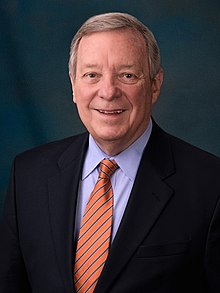
Senator “Majority Whip” Dick Durbin, Chairman Senate Judiciary Committee (More Powerful Than Pain)
THE TROUBLE WITH CONGRESS BEING COMFORTABLE IN THEIR IGNORANCE IS EXPRESSED BELOW IN THIS LETTER FROM SENATOR DICK DURBIN (D) DEMONSTRATING THE THREAT OF NIDA DIS-INFORMATION
According to John D. Lilly, M.B.A., D.O., practices family medicine in Springfield, MO. (Contact: johnlilly97@gmail.com)
“Not all opioids are identical in abuse potential and likely lethality, yet government statistics group causes of death in a way that obscures the importance of identifying specific agents involved in deadly overdoses.
Searching the CDC Wonder database reveals that the recent spike in deaths is primarily due to illicit fentanyl. Targeting legal prescriptions is thus unlikely to reduce overdose deaths, but it may increase them by driving more users to illegal sources.”

October 8, 2024

“..They can do whatever they want because they’re the police. What they do when they go to patients’ homes as they try to get the goods on the doctor, Snooping around at the prescriptions, trying to find something like a nail doctor and get their bonuses..”
THE RED FLAGS OF TRUTH
According to Pat Anson of Pain News Network:
“The DEA has been cutting opioid production quotas for nearly a decade, reducing the supply of oxycodone by over 68% and hydrocodone by nearly 73% since 2015.
Many of those cuts are due to pressure from Congress, which has turned its head to check the abuses of D.E.A., as well as create the common belief that prescription opioids are often diverted or sold to people they are not intended for. This belief is essentially a myth.
That belief is essentially a myth.

As required by Congress, the DEA estimated the diversion rate of schedule II opioids in 2025 and once again concluded that diversion is rare – less than half of one percent for oxycodone and hydrocodone.
Yet, much of the diversion is a result of theft and losses in the supply chain before opioids even reach patients.”
This has led to draconian laws and the use of invasive prescription monitoring programs that have harmed patients and raised the cost of medical care overall, notwithstanding the billions of dollars paid to companies such as Qlarant, TLOF, et al., generating fake Data through A-I manipulation. More importantly, black box algorithms mine data and have never been subjected to independent verification.

Helen Borel, Rn, Ph.D
“Will this #OpioHYSTERIA ever end in 2024? Only if DOJ LAWYERS & DEA POLICE CEASE PRACTICING MEDICINE<-about which they’ve no clue.”
_________________________/

6. Joanne Wolfe, Holcome E. Grier, Neil Klar, Sarah B. Levein et al., “Symptoms and Suffering at the End of Life in Children with Cancer,” New England Journal of Medicine 342 (February 2000): 326–33, http://content.nejm.org/cgi/content/short/342/5 /326.
7. Hall, “Living in Pain Addiction.”
8. American Medical Association, “Patients Face Numerous Barriers to Receiving Appropriate Pain Treatment,” news release, July 1997.
23. H. H. Kane, The Hypodermic Injection of Morphia, Its History, Advantages, and Dangers, as discussed by Edward M. Brecher and the editors of Consumer Reports Magazine, 1972, http://216.2 39.41/search?q=cache:HEPOU8XULTAJ:www.dru gtext.org/library/reports.
48. U.S. Department of Justice, Drug Enforcement Administration, Diversion Control Program, “Summary of Medical Examiner Reports on Oxycodone-Related Deaths,” May 16, 2002, www. deadiversion.usdoj.gov/drugs_concern/oxy codone/oxycotin7.htm.
49. Ibid., p. 4.
50. Ibid., pp. 1–2. 51. Ibid., p. 2.
71. Ibid., http://www.usnews.com/usnews/cul ture/articles/970317/archive_006482_4.htm.
98. Statement of Thomas W. Raffanello, Special Agent in Charge, Miami Division, U.S. Drug Enforcement Administration, before the U.S. House of Representatives Committee on Government Reform, Subcommittee on Criminal Justice, Drug Policy and Human Resources, February 9, 2004, p. 4.
122. 21 USC Section 802 Definitions (1).

ITS ALL ABOUT SEIZING ASSETS WITH FIGURES THAT LIE FROM GOVERNMENT LIARS PAID BIG FIGURES
According to the Controlled Substances Act, all monies or other things of value furnished by any person in exchange for controlled substances are subject to forfeiture. (109) The money from these seizures is split between the law enforcement agencies making the bust, and the remainder goes to the DOJ’s Forfeiture Fund, which coordinates more investigations.

In 2002, drug asset forfeitures totaled $441 million. In 2001, the DEA shared $179,264,498 of its asset forfeitures with local and state police departments. (110)
The total forfeiture fund was worth about $1.2 billion by 2002.(111).
From the 2005 Libby Report;
“The case of Kentucky physician Dr. Ghassan Haj-Hamed is a good example. The DEA sued Dr. Haj-Hamed in 2002, accusing his clinic of diversion and drug distribution. After more than two years, the doctor agreed to settle, paying $17,000 and handing over two automobiles in exchange for the federal government dropping its suit for $133,000.
Haj-Hamed’s lawyer told the Kentucky Post that the government’s practice of seizing all of a doctor’s assets, then expecting him to fight the case, all while still paying taxes and earning a living, “inevitably puts the person in a position where they have to set- tle.”(117) Prosecutors haven’t yet decided whether or not to pursue criminal charges.”
The DEA distributes the vast majority of asset forfeiture money to state and local law enforcement agencies who work with the agency on drug cases. It is a perverse system.


MY BACKGROUND
I trained under Rafael Miguel, M.D., during my pain medicine fellowship training for almost three years at @USFHealth and@MoffittNews from 2009 to 2012. He was a giant in the field of anesthesiology and pain management. He passed from pancreatic cancer in 2016.

The prosecutors in Detroit could not even get our names right on the documents they were sending us, including the sentencing guidelines, the plea deal, the restitution, and all that other B.S.
We intimidated McMillion and Helms. During the trial and testimony, we focused on the science, medicine, and care of chronic pain patients and their symptomatology and pathology.

We broke down the charts and explained our decision-making regarding a multi-modal approach to pain management. This included rational polypharmacy, including opioids and non-narcotic medications. DME, physical therapy, injections, urine drug screens, opioid agreements, pill counts, referrals to other specialists, including addiction medicine and surgical consultations.
FROM A LONG LIST OF HEROES, FIGHTERS AND WOLVERINES IN MEDICINE

They ruined my life, my career, my finances, my plans, and my future. And they don’t have any consequences other than the embarrassment of losing a big case like that.
I thought it was just amazing. My Dad completed a neurosurgery residency and fellowship at the University of Michigan, and my Mom is a Dentist.
My expert witness was Dr. Anthony Chiodo, MD., from the University of Michigan, who had been the past president of the American Board of Physical Medicine and Rehabilitation and The American Association of Neuromuscular and Electrodiagnostic Medicine.
All this education, all this training, and all of this Knowledge, and this Government Misfitted, Mis-Guided, Slick Prosecutors used my (our) ability, my (our) skills to further their legal careers to define me and my colleagues as drug dealers. I was pissed; we were all pissed and ready for a fight!!!
There was no way Margolis was going to let them railroad me. Our expert witness, Dr. Anthony Chiodo, MD., also happened to be a full professor specializing in pain, physiatry, spinal cord injury and the director of the spinal cord injury fellowship program.

The strategy never changes. I know we were trying to connect him with @RonChapmanAtty. Hopefully, that happened.


ENTER THE COURTROOM RON CHAPMAN
My advice to anybody who is charged with healthcare fraud and prescription drug crimes is to not go within 27 miles of a courthouse without Chapman right behind you.

“We had a nice chat last night with Ron Chapman; there is nothing but respect and admiration. And he thanked me for my kind words.
But I told him that was an honest assessment from somebody sitting no more than 10 feet from him every day for seven weeks.
He is a wrecking ball and a prosecutor‘s worst nightmare.
Just days before the pain center trial was scheduled to start, 3.5 years after the countless delays.
We broke down the charts and explained our decision-making regarding a multi-modal approach to pain management. This included rational polypharmacy, including opioids and non-narcotic medications.

DME, physical therapy, injections, urine drug screens, opioid agreements, pill counts, referrals to other specialists, including addiction medicine and surgical consultations.
Remember, there was no formal medical expert review of the practice at the time of the FBI raid on the Pain Center.
Just a narrative and several interviews with Hersh Patel, MD, who was fresh out of his training program and was still in his orientation phase after being newly hired by Dr. Rajendra Bothra.

WHERE LAW INTERACTS WITH HEALTHCARE
or desire to profit from narcotics diversion to secure a conviction.(156) In fact, it’s not even necessary for the government to have expert medical testimony that a doctor’s actions were illegitimate or outside the usual course of professional practice. The DEA believes it can bring charges against doctors even if they never actually distributed drugs or their pre- scriptions were never actually filled. In fact, there seems to be no evidentiary standard at all that doctors can rely on to thwart a con- eviction.(157); Libby Report 2005

However, when we walked into the federal courthouse, I had Mr. Margolis extremely fluent in anatomy, pharmacology, anesthesiology, and interventional pain.
I don’t know about Dr. Bothra Lewis or Edu, but Margolis and I must have read all of the discovery materials from start to finish 50 or 60 times for the 3.5 years we waited for trial.

Margolis was a quick study, which was not surprising considering that his father, Philip Margolis MD, had been a famous forensic psychiatrist at the University of Michigan and the Chairman of the Board of Medicine in The state of Michigan for many, many years while he was growing up in Ann Arbor.”
How many of those federal prosecutors, magistrates, and “special agents” with the Detroit FBI and HHS-OIG lost their homes, income, and savings after their incompetent investigation and their hoax prosecution were exposed by the doctors in court?
Why do they still even have jobs?
We shoved their idiotic and sophomoric indictment right up their asses


SMEAR PARROTS AND THE CLASSIC CAR

You can see Board-Certified pain anesthesiologist Dr. David Lewis’s classic car behind the agents raiding his home. Photos from doorbell cam. I will repeat it: everybody in Detroit has a Classic Car, and that is not evidence of anything. It is a Pure Smear.
They love to pontificate in front of their smear parrots in the media about accountability for healthcare professionals subjected to their “enforcement” actions but don’t have a single ounce of accountability themselves.


OxyContin pills or prescriptions at a crime scene, or a family member or witness merely mentions the presence of OxyContin, the death is also confirmed as “OxyContin-veri- fied.”(51)


However, being willfully ignorant can be counterproductive and part of the problem that prevents the world from making significant change. Some pitfalls of blissful ignorance include: In my mind, comfortable ignorance can be defined as the level of knowledge an individual has where they feel confident they understand something, but underestimate how much they do not understand.

SUBJECTIVE DISBELIEF: THE UNDERSTANDING OF PLATO’S ALLEGORY OF THE CAVE, DO WE WANT THE TRUTH OR DO WE WANT BARRY MEIER AND MALCOLM GLADWELL???
_____________________________/

37. The Controlled Substances Act created five categories of drugs based on their approved med- ical use and the potential to addict patients. Schedule I drugs, such as heroin and marijuana, have no approved medical use and were said to have a high potential for addiction. They are authorized for medical research only. Schedule II drugs are narcotics and nonnarcotics such as cocaine, methadone, oxycodone, and OxyContin. They also include nonnarcotic drugs such as amphetamines and barbiturates that are approved for medical use but have the highest addictive potential. Schedules III, IV, and V include narcotics combined with nonnarcotic drugs, such as codeine and aspirin, and caffeine and mild depressants, and tranquilizers that have a low risk of addiction.
38. “DEA Mission Statement,” Drug Enforcement Administration, http://www.dea.gov/agency/mission. htm.
39. “Drug Control, DEA’s Strategies and Operations in the 1990s,” GAO/GGD-99-108, July 1999, pp. 7, 61, 72–73, 78 (Washington: General Accounting Office, July 1999).
40. U.S. Department of Justice, “Status of Achieving Key Outcomes and Addressing Major Management Challenges,” June 2001.
41. “Review of the Drug Enforcement Administra- tion’s (DEA) Control of the Diversion of Controlled Pharmaceuticals,” The Drug Enforce- ment Administration, September 2002, http:// http://www.usdoj.gov/oig/inspection/DEA/0210/ Memo.htm.
42. U.S. Department of Justice, Drug Enforcement Administration, “Action Plan to Prevent the Diversion and Abuse of OxyContin,” 2001; U.S. Department of Justice, Drug Enforcement Administration, “DEA-Industry Communicator: Oxy-Contin Special,” vol. 1.
48. U.S. Department of Justice, Drug Enforcement Administration, Diversion Control Program, “Summary of Medical Examiner Reports on Oxycodone-Related Deaths,” May 16, 2002, www. deadiversion.usdoj.gov/drugs_concern/oxy codone/oxycotin7.htm.
49. Ibid., p. 4.
50. Ibid., pp. 1–2.
51. Ibid., p. 2.
52. Ibid.
53. Cone et al., “Oxycodone Involvement in Drug Abuse Deaths: A DAWN-Based Classification Scheme Applied to an Oxycodone Postmortem Database Containing over 1000 Cases,” Journal of Analytical Toxicology 27, no. 2 (March 2003): 57–67. This study was funded by Purdue Pharma, manu- facturer of OxyContin but was subjected to the normal peer review process.
53. Cone et al., “Oxycodone Involvement in Drug Abuse Deaths: A DAWN-Based Classification Scheme Applied to an Oxycodone Postmortem Database Containing over 1000 Cases,” Journal of Analytical Toxicology 27, no. 2 (March 2003): 57–67. This study was funded by Purdue Pharma, manu- facturer of OxyContin but was subjected to the normal peer review process.
54. Ibid.
55. Drug Enforcement Administration, May 16, 2002, p.1.
56. Ibid, p. 4.
108. Alberto R. Gonzales, U.S. attorney general, Statement before the U.S. House of Representatives, Committee on Appropriations, Subcommittee on Science, the Departments of State, Justice, Com- merce, and Related Agencies, March 1, 2005, http:// http://www.justice.gov/ag/testimony/2005/022805fy06ag housetestimonyfinal.htm.
109. 21 USC Sec. 853:1–2.
110. Drug Enforcement Administration, “Asset Forfeiture Benefits Local Police Departments,” news release, March 25, 2003, http://www.usdoj.gov/dea/ pubs/states/newsrel/kentucky032503p.html; Hutchinson, April 11, 2002, p. 6.
111. U.S. Department of Justice, Office of Inspector General, Audit Division, “Assets Forfeiture Fund and Seized Asset Deposit Fund Annual Financial Statement Fiscal Year 2002, Report 03-20,” June 2003, p. 1.
112. The National Association of Drug Diversion Investigators was founded in 1987 for the pur- pose of investigating and prosecuting pharma- ceutical drug diversion. There are about 2,400 members of NADDI representing local and state and police departments, DEA agents, insurance investigators, drug companies and pharmacies’ loss prevention departments, and state medical board and pharmacy regulatory agents who inves- tigate and prosecute the diversion of prescription drugs. NADDI has 14 state chapters in Alabama, California, the Carolinas, Florida, Indiana, Kentucky, Maryland, New England, New York, Ohio, Pennsylvania, Tennessee, Texas, and Vir- ginia. NADDI hosts training seminars for the purpose of coordinating methods of investigat- ing and prosecuting drug diverters.
113. Dennis M. Luken, lecture on “Pharmaceutical Drug Diversion Schemes,” National Association of Drug Diversion Investigators Training Conference, July 24, 2003.
114. Greg Aspinwall, “Diversion of Non-Controlled Drugs,” National Association of Drug Diversion Investigators Training Conference, July 24, 2003.
115. Ibid.
116. Luken.
117. Kevin Eigelbach, “Federal Suit of Doctor Settled,” Kentucky Post, December 31, 2004.
118. DEA Diversion Control Program, “Rules- 2003,” Federal Register 68, no. 32 (February 18, 2003): 5.
OR SEND
TO CASH APP:$docnorm
ZELLE 3135103378

ALL WATCHED OVER BY MACHINES OF LOVING GRACE
BE SURE TO DONATE TO THE MARK IBSEN GOFUNDME DEFENSE FUND, WHERE THE SON ALWAYS RISES!!!
FOR NOW, YOU ARE WITHIN
THE NORMS
